Mold Gel vs Mold Spray: The Only Comparison That Matters Is Contact Time
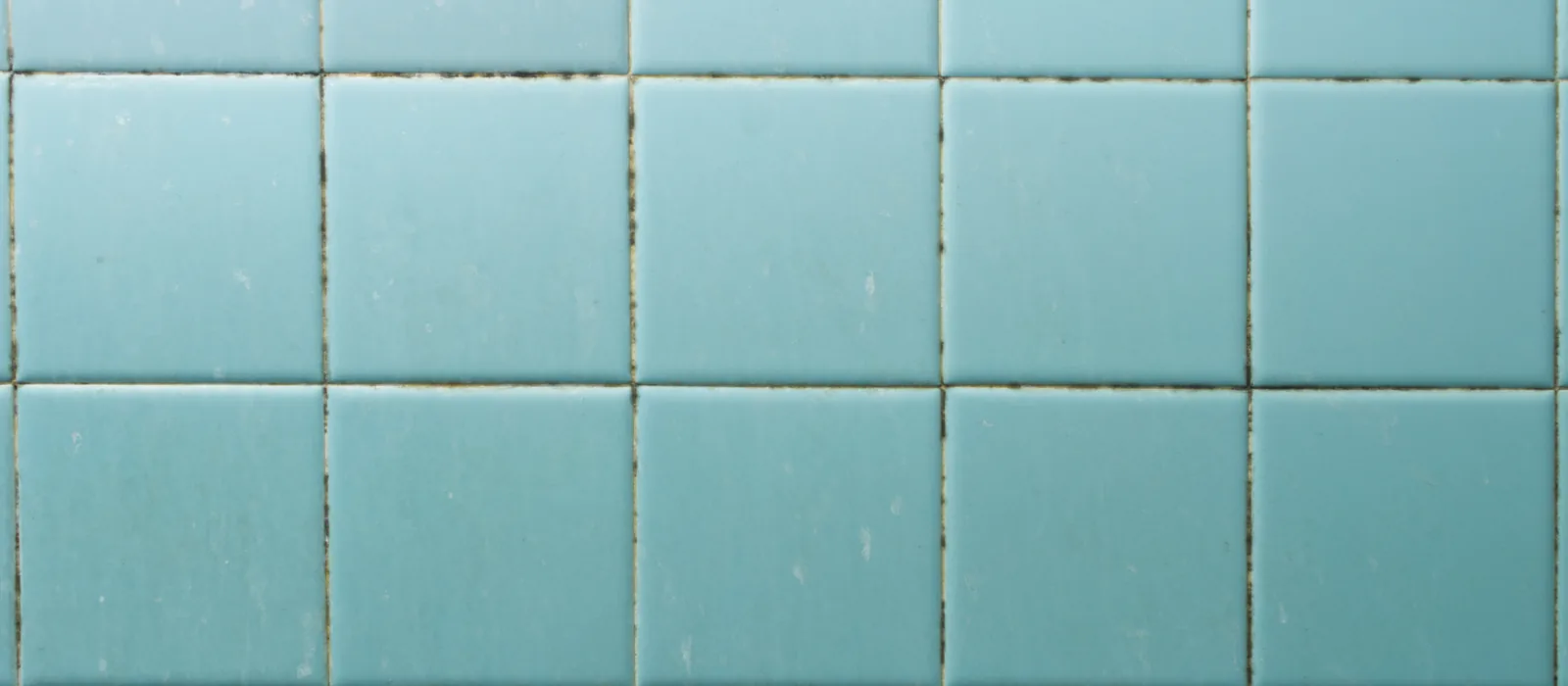
Put a $14.99 gel and an $8.99 spray side by side and read the active ingredients. Sodium hypochlorite in both. Household bleach, doing the killing and the stain removal in each one, at concentrations close enough that nobody advertises the difference.
So here is the question this page exists to answer. If the chemistry is the same, why does one of them strip blackened shower caulk overnight while the other one fails at that exact job, every spring, for years, in millions of bathrooms?
The answer is not chemistry at all. It is how long the chemical stays touching the stain, and a spray on a vertical surface loses that contest to gravity in about the time it takes to put the bottle down. We call it Run-Off Failure, and once you see it you cannot unsee it.
The physics of a vertical surface
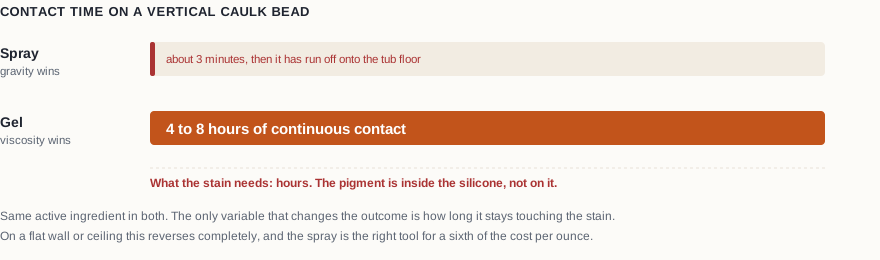
Mold staining in silicone is not a surface film. The organism grows into the caulk and leaves pigment beneath the surface, and hypochlorite needs prolonged contact, hours rather than minutes, to penetrate and break that pigment down. Now spray a thin liquid onto a vertical bead of caulk and watch it. Within two or three minutes gravity has pulled nearly all of it down onto the tub floor. The stain got a couple of minutes of weak contact and needed a couple of hundred. You can repeat that every Saturday forever and the caulk stays black.
A gel is the same active ingredient with the viscosity turned up until gravity loses. Lay a bead of gel on that same caulk and it is still sitting there eight hours later, wet, in full contact. Same chemical, roughly a hundred times the working time. That is the whole trick, and it is why the answer to "which mold remover actually works on caulk" is always a format answer rather than a brand answer.
What that convenience costs
The honest counterweight, which most sites in this category leave out. Thickening bleach so it defeats gravity is not free, and the pricing is not subtle:
| Format | Cheapest we cover | Most expensive we cover |
|---|---|---|
| Spray | $0.28 per fl oz | $0.53 per fl oz |
| Gel | $1.50 per fl oz | $3.00 per fl oz |
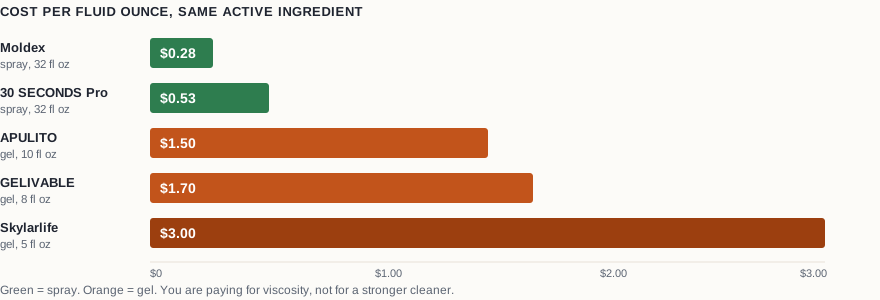
Between the cheapest spray and the priciest gel that is better than a ten-to-one spread for the same active ingredient. Read that as a warning in both directions. Buying spray for stained caulk wastes the money entirely, because no amount of repeat application fixes a three-minute contact time. Buying gel for a wall or ceiling wastes it just as thoroughly, because you pay six times the rate per ounce for a slower result on a surface where the mold was only ever superficial.
Where each format wins
| Surface | Winner | Why |
|---|---|---|
| Vertical silicone caulk | Gel | Needs hours of contact; only gel stays put |
| Washer door gasket | Gel, worked in with a brush | Folded rubber; gel painted into the fold stays there |
| Grout lines, vertical | Gel | Stains sit deep in porous grout |
| Painted walls and ceilings | Spray | Large area; surface growth only; gel would cost six times as much and take all night |
| Tile faces | Spray | Non-porous, mold is superficial, minutes are enough |
| Window frames and sills | Spray first | Mostly surface growth; gel only for stained gaskets |
| Siding, decks, fences | Spray | Huge area; cost per ounce is the only thing that matters |
| Weekly prevention | Spray | Fresh spores die in minutes; cheap and fast |
The case where neither wins
Worth saying plainly because it saves people real money. If the caulk has gone black through the full depth of the bead rather than on its surface, the answer is not a stronger product. It is a utility knife and a fresh tube of caulk. No gel reaches through cured silicone, and you can spend $30 on two tubes of gel discovering that. Cut it out, re-caulk, and use gel afterwards to keep the new bead clean.
The two-product system
Almost nobody actually faces this as an either/or, which is worth saying because every roundup online frames it as one. A typical house has both problems: caulk and grout that need hours of contact, and walls, tile and ceilings that need coverage. Two products, roughly $30 together, each doing the job the other physically cannot:
- One gel for restoration. APULITO for the volume, or GELIVABLE if you want to see the stain lifting while it works. Applied properly, this is a once or twice a year job.
- One spray for everything flat. 30 SECONDS Pro for indoor walls, ceilings and tile, or Moldex if the job is outdoors and the area is large.
One caveat that outranks everything above. Both of these are stain removers, and a stain is the record of a problem rather than the problem. Neither one changes how much water is in your air, so on an unchanged room the clock starts again the moment you rinse. If you only read one more page here, read the prevention guide, because it is the only page on this site that ends the cycle instead of resetting it.
Check APULITO gel price Back to the full roundup